Menacing & Dangerous Dogs
In New Zealand, a dangerous dog classification is a formal legal status assigned by local councils under the Dog Control Act 1996. This classification applies if a dog has caused serious injury, endangered public safety, or constitutes a threat based on sworn evidence, requiring strict containment, muzzling, and higher registration fees.
Dog ownership in New Zealand is a privilege that comes with significant legal responsibilities, particularly when public safety is concerned. The Dog Control Act 1996 provides the framework for how local councils manage canine behavior, ensuring that dogs posing a risk to the community are strictly monitored and controlled. For owners, receiving a notice of classification—whether “Menacing” or “Dangerous”—is a serious legal matter that fundamentally changes how you must manage your animal.
Understanding the nuances of dangerous dog classification NZ regulations is critical not only for compliance but for the safety of your pet and the public. Ignorance of these laws can lead to hefty fines, seizure of the animal, and in severe cases, court-ordered destruction of the dog.
What Determines a Dangerous Dog Classification in NZ?
New Zealand law distinguishes between two primary categories of high-risk dogs: Menacing and Dangerous. While they sound similar, they carry different legal thresholds and consequences. Local councils (territorial authorities) are responsible for making these determinations based on evidence, history, and breed standards.
The Criteria for “Dangerous” Classification (Section 31)
The “Dangerous” label is the most severe classification a dog can receive short of a destruction order. A territorial authority must classify a dog as dangerous if:
- Conviction: The owner has been convicted of an offence under Section 57A(2) (dog rushing at persons, animals, or vehicles) involving that specific dog.
- Sworn Evidence: The council has sworn evidence attesting that the dog is aggressive and constitutes a threat to the safety of any person, stock, poultry, domestic animal, or protected wildlife.
- Owner Admission: The owner admits in writing that the dog constitutes a threat to safety.
Once classified as dangerous, the classification applies for the life of the dog anywhere in New Zealand, regardless of a change in ownership or relocation to a different city.
The Criteria for “Menacing” Classification (Section 33A & 33C)
A “Menacing” classification is slightly less severe than “Dangerous” but still imposes strict restrictions. This classification is generally applied under two distinct circumstances:
- Behavioral (Section 33A): The council believes the dog may pose a threat to any person, stock, poultry, domestic animal, or protected wildlife based on observed behavior or reported incidents (even if no injury occurred).
- Breed Characteristics (Section 33C): The dog belongs wholly or predominantly to one of the breeds or types listed in Schedule 4 of the Act (detailed below).
Mandatory Requirements: Muzzles, Fencing, and Control
Once a dog is classified under the dangerous dog classification NZ laws, the owner must adhere to strict operational rules. These are not guidelines; they are legal requirements enforceable by prosecution.
1. Muzzling and Leashing in Public
This is the most visible requirement. If your dog is classified as dangerous or menacing:
- Muzzles: The dog must be muzzled whenever it is at large or in any public place. The muzzle must prevent the dog from biting but allow it to breathe and drink freely.
- Leashing: Dangerous dogs must be controlled on a leash at all times in public. Unlike standard dogs, they cannot be exercised off-leash in designated dog parks.
2. Secure Containment and Fencing
For dogs classified as dangerous, the containment rules are prescriptive. The dog must be kept within a securely fenced portion of the owner’s property. The fencing must be sufficient to prevent the dog from leaving the property and prevent people (such as couriers or children) from inadvertently entering the area where the dog is kept.
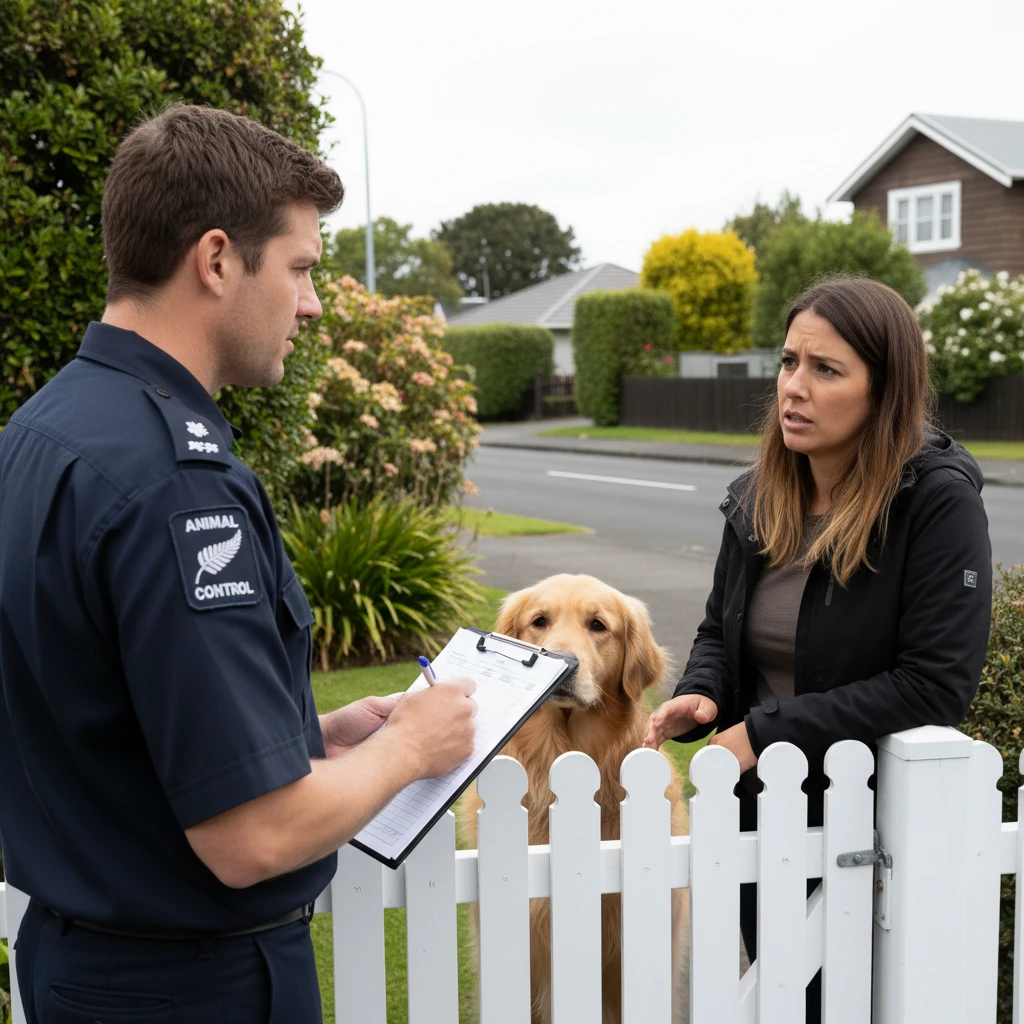
Animal Control Officers have the authority to inspect your property to ensure the fencing meets these standards. If the fencing is deemed inadequate, they can issue a notice requiring immediate upgrades. Failure to comply can result in the dog being seized.
3. Mandatory Desexing (Neutering)
Under the Dog Control Act, if a dog is classified as dangerous, it must be desexed within one month of the classification. This is a non-negotiable step intended to reduce aggression and prevent the propagation of aggressive traits. For menacing dogs, the council may require desexing, but it is almost universally enforced for breed-specific menacing classifications.
4. Disclosure of Status
If you sell or give away a classified dog (which is highly restricted for dangerous dogs), you must inform the new owner of the classification. Furthermore, you must notify the territorial authority of any change in address or ownership within 14 days.
Higher Registration Fees for Classified Dogs
Owning a classified dog is significantly more expensive than owning a non-classified dog. Councils use fiscal policies to discourage the ownership of high-risk animals and to cover the increased administrative costs of monitoring them.
Typically, the registration fee for a dog with a dangerous dog classification in NZ is set at 150% of the standard registration fee. For example, if a standard dog costs $120 to register, a dangerous dog may cost $180 or more annually.
Instant Fines (Infringement Fees):
- Failure to comply with the effects of classification (e.g., no muzzle): $300
- Failure to advise of change of ownership: $100
- Releasing a dangerous dog from custody: $750
It is important to note that these are merely infringement fees. If a classified dog attacks someone, the owner can face imprisonment of up to 3 years and fines of up to $20,000, in addition to the dog being destroyed.

Schedule 4: The 5 Banned Breeds in NZ
New Zealand has a specific ban on the importation of certain breeds, and existing dogs of these breeds are automatically classified as Menacing under Section 33C. These breeds are believed to be more likely to attack and cause serious injury due to their physical capabilities and breeding history.
The Schedule 4 Breeds are:
- American Pit Bull Terrier (and its crosses)
- Dogo Argentino
- Brazilian Fila
- Japanese Tosa
- Perro de Presa Canario
If your dog is identified by Animal Control as being predominantly one of these breeds, it will be classified as menacing regardless of its individual behavior. This often requires DNA testing or expert assessment if the breed is contested.
Appealing a Classification
Receiving a classification notice does not mean you have no recourse. The Dog Control Act builds in an objection process, recognizing that identification errors or contextual misunderstandings can occur.
How to Object
You have 14 days from the receipt of the classification notice to lodge a written objection with the territorial authority. Your objection must clearly state the grounds for your appeal. Common grounds include:
- Mistaken Identity: The dog involved in the incident was not your dog.
- Breed Dispute: You have evidence (such as pedigree papers or DNA results) proving your dog is not a Schedule 4 breed.
- Context of Incident: For behavioral classifications, you might argue the dog was provoked or was defending its property/owner in a lawful manner.
The Hearing Process
Once an objection is lodged, the council’s regulatory committee will schedule a hearing. You are entitled to be heard and can present evidence or call witnesses. The committee has the power to uphold or rescind the classification. It is highly recommended to seek legal advice or assistance from a dog behavior expert when preparing for these hearings.

Managing a Classified Dog Responsibly
If the classification stands, responsible management is the only way forward. Owning a classified dog requires a shift in mindset from “pet ownership” to “risk management.”
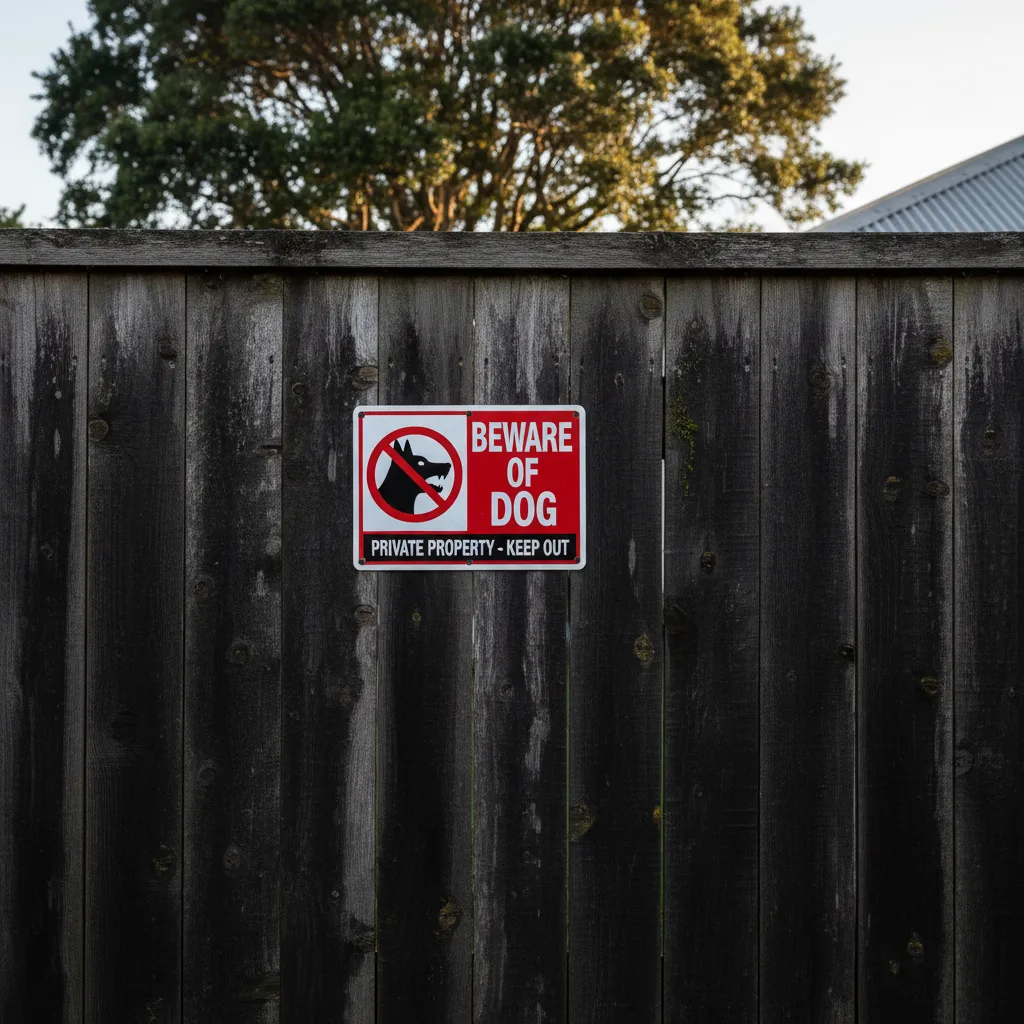
Beyond the legal requirement of muzzles and fences, owners should invest in professional behavioral training. While training cannot legally remove a “Dangerous” classification once applied, it is essential for preventing the incidents that lead to prosecution and destruction orders. Ensure your property has clear signage (e.g., “BEWARE OF DOG”) at all entry points to mitigate liability if someone trespasses.
Ultimately, the dangerous dog classification NZ system is designed to protect the community. By adhering to the rules, you protect your dog from seizure and ensure that you can continue to care for your animal within the bounds of the law.
Can a dangerous dog classification be removed in NZ?
Generally, a “Dangerous” classification lasts for the life of the dog. However, a “Menacing” classification based on behavior may legally be reviewed and potentially rescinded by the council after a set period (usually 12 months) if the owner can demonstrate significant behavioral improvement and compliance, though this varies by local council policy.
What happens if a classified dog bites someone?
If a dog already classified as dangerous or menacing attacks a person or animal, the consequences are severe. The dog is almost invariably seized and destroyed. The owner can face imprisonment for up to 3 years and fines up to $20,000. It is a strict liability offence.
Do all Pitbulls have to be muzzled in NZ?
Yes, if they are classified as Menacing due to their breed (Schedule 4). All American Pit Bull Terriers are automatically classified as menacing under the Act, meaning they must be muzzled in public and desexed, regardless of their individual temperament.
Can I import a Dogo Argentino to New Zealand?
No. The importation of Dogo Argentinos, along with the other four breeds listed in Schedule 4 of the Dog Control Act, is strictly prohibited. Semen and embryos from these breeds are also banned from import.
Who decides if my dog is a menacing breed?
Animal Control Officers employed by the local council make the initial determination based on physical characteristics and breed standards. If the owner disagrees, the burden of proof falls on the owner to provide evidence (such as DNA testing or veterinary certification) that the dog is not predominantly a banned breed.
What are the fencing requirements for a dangerous dog?
Fencing must be secure enough to contain the dog at all times and prevent unauthorized entry by visitors. This usually implies high fences (often 1.8m+), locked gates, and potentially double-gating systems to prevent escape when a human enters the property. Animal Control must inspect and approve the containment.