Microchipping Requirements
In New Zealand, dog microchipping requirements mandate that all dogs registered for the first time after 1 July 2006 must be microchipped within two months of registration. Additionally, all dogs classified as dangerous or menacing, regardless of age, must be microchipped. This permanent identification is a legal requirement under the Dog Control Act 1996.
The Legal Framework: Dog Microchipping Requirements NZ
Understanding the legislation surrounding dog ownership in New Zealand is the first step to responsible pet guardianship. The primary legislation governing this is the Dog Control Act 1996. While dog registration has been a long-standing requirement, mandatory microchipping was introduced to provide a more permanent and infallible method of linking a dog to its owner.
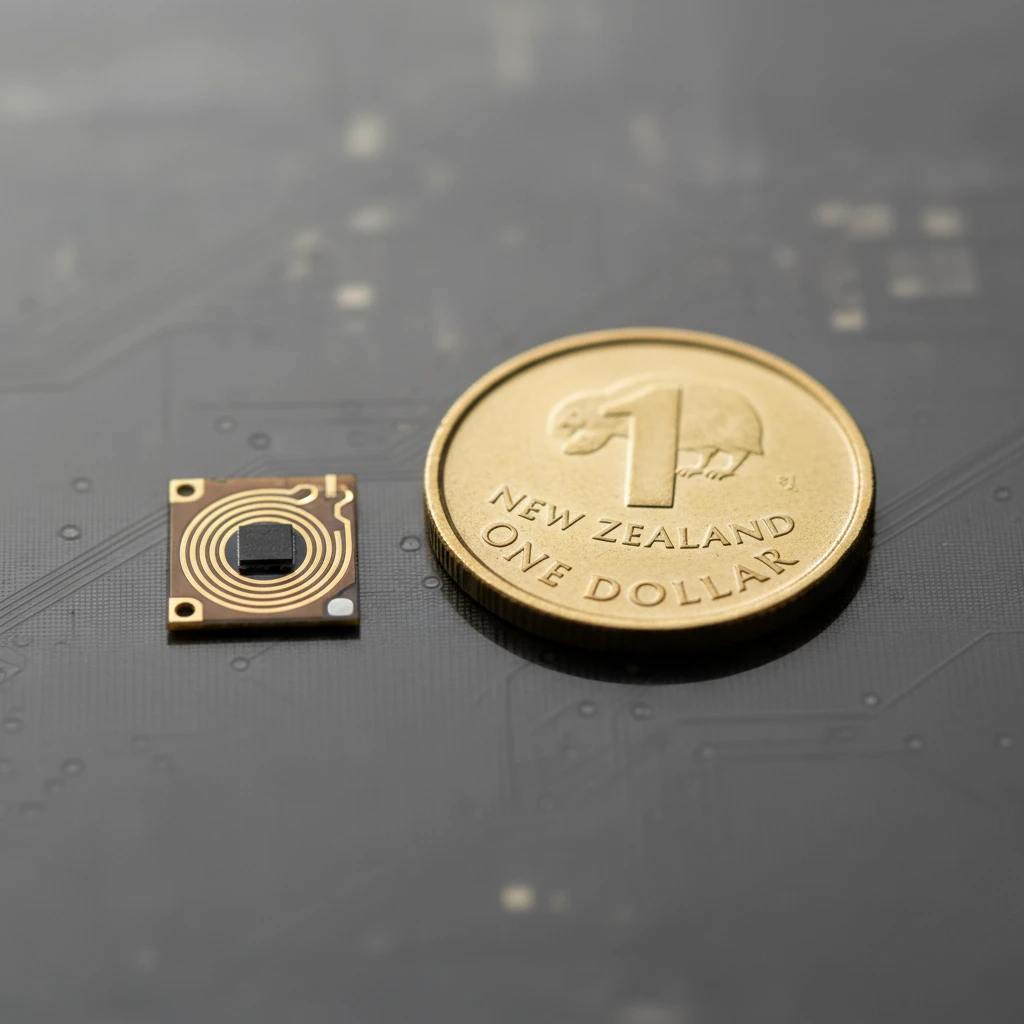
Unlike a collar or tag, which can be removed, lost, or broken, a microchip is a permanent radio-frequency identification (RFID) transponder. It is roughly the size of a grain of rice and is implanted under the dog’s skin. The legal requirement serves two main purposes: animal welfare (reuniting lost pets) and animal control (managing dangerous dogs and ensuring owner accountability).
Who Must Be Microchipped?
According to New Zealand law, the following categories of dogs must be microchipped:
- New Registrations: Any dog being registered for the first time in New Zealand after 1 July 2006. This typically applies to puppies when they reach three months of age.
- Dangerous or Menacing Dogs: If a dog is classified by the local council as “dangerous” or “menacing” (either by breed or deed), it must be microchipped within two months of the classification, regardless of when it was born or first registered.
- Impounded Dogs: Unregistered dogs that are impounded must be microchipped before they can be released to their owners.
Exemptions: The Working Dog Clause
New Zealand’s economy relies heavily on agriculture, and the legislation reflects this through specific exemptions. It is crucial to understand whether your animal falls under the definition of a “working dog” as per the Act, as this impacts your microchipping requirements.
Working farm dogs are generally exempt from the mandatory microchipping requirement unless they are impounded unregistered or classified as dangerous/menacing. Under the Act, a working dog is defined primarily as a dog kept solely or principally for the purpose of herding or driving stock.
However, this exemption does not apply to:
- Hunting dogs (pig dogs, duck dogs).
- Security dogs.
- Guide dogs or hearing dogs (though these are usually chipped for safety, legally they fall under different operational guidelines).
If you own a farm dog that is not strictly used for herding stock, or if you simply keep a pet dog on a farm, the standard dog microchipping requirements NZ apply.
Where to Get Microchipping Done in Hamilton
For dog owners located in the Waikato region, specifically Hamilton, there are several reliable avenues to ensure your dog is compliant with local and national laws. Hamilton City Council takes animal management seriously, providing accessible options for residents.
Hamilton City Council Animal Education and Control
The Hamilton City Council offers microchipping services, often at a subsidised rate compared to private veterinary clinics. This is part of their initiative to ensure 100% compliance and reduce the number of unidentified roaming dogs. Their facility is typically located near the Animal Control Centre on Cobham Drive. It is advisable to book an appointment, especially during registration season (July/August).
Local Veterinary Clinics
Hamilton boasts a wide network of high-quality veterinary clinics. Nearly all vets in Hamilton—from Hillcrest to Te Rapa—offer microchipping services. While this may be slightly more expensive than Council services, it is often more convenient to have the chip implanted during a routine vaccination or desexing surgery.
SPCA Hamilton
The SPCA (Society for the Prevention of Cruelty to Animals) also provides microchipping services. If you adopt a dog from the Hamilton SPCA, the animal will legally be microchipped and registered before you take them home. They occasionally run community microchipping drives where the service is offered at a reduced cost to help low-income families comply with regulations.

The Critical Link: Linking Microchips to the National Dog Database (NDD)
A microchip is useless if the number it transmits is not linked to a database containing the owner’s contact details. In New Zealand, there is often confusion between the two primary databases. Understanding the difference is vital for the safety of your pet.
1. The National Dog Database (NDD)
The NDD is a government database maintained by the Department of Internal Affairs. When you register your dog with your local council (e.g., Hamilton City Council) and provide the microchip number, the council uploads this information to the NDD.
Purpose: This allows Animal Control Officers anywhere in the country to identify a registered dog. It is primarily for regulatory and control purposes.
2. The New Zealand Companion Animal Register (NZCAR)
While the NDD is mandatory, the NZCAR is the gold standard for pet recovery. It is a private, charity-run database. Most vets and the SPCA will register your dog on the NZCAR at the time of microchipping.
Why you need both: The NDD is accessible by councils. The NZCAR is accessible by vets, the SPCA, and other animal welfare agencies. If your dog is found injured and taken to a vet after hours, the vet cannot access the council’s NDD but can access the NZCAR. Therefore, for the highest chance of reunification, your dog should be on both.
Important Note: If you move houses or change phone numbers, you must update both the Council (for the NDD) and the NZCAR separately. They do not automatically sync.
Cost Estimates for Microchipping in NZ
The cost of meeting dog microchipping requirements in NZ varies depending on where you choose to have the procedure done. Prices are subject to change, but the following estimates provide a general baseline for budgeting.
Council Microchipping
Local councils often provide the most improved rates to encourage compliance. In Hamilton and surrounding Waikato districts, the fee for microchipping at the Animal Control centre typically ranges between $20 and $40 NZD. This usually covers the implantation and the administrative task of entering the number into the council registry.
Veterinary Clinic Microchipping
Private veterinary clinics generally charge a higher fee, which covers the professional time of the vet or vet nurse, the sterile equipment, and the chip itself. Prices can range from $60 to $90 NZD. However, this often includes registration onto the NZCAR (which has a one-off fee of roughly $15 included in that price).
Pro Tip: Many vets offer a discount if the microchipping is done simultaneously with other procedures, such as desexing or general surgery, as the dog is already anaesthetized or sedated.
Registration Fees vs. Microchipping Fees
It is vital not to confuse these costs. Microchipping is a one-off cost (unless the chip fails, which is rare). Dog Registration is an annual fee paid to your local council (usually due by July 31st each year).
The Procedure: What to Expect
Many owners are anxious about the process, fearing it will cause their pet pain. Understanding the procedure can alleviate these concerns.
Is it painful?
The sensation is comparable to a standard vaccination injection. The needle used for microchipping is slightly larger than a vaccine needle because it must accommodate the chip, but the process is over in seconds. Most dogs react minimally, perhaps with a small flinch, while others—especially if distracted with treats—don’t notice it at all.
How is it done?
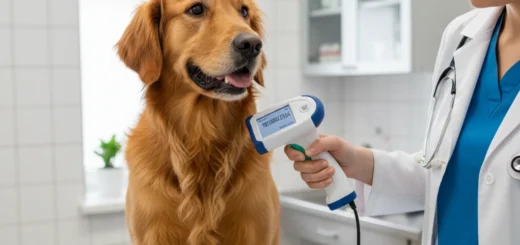
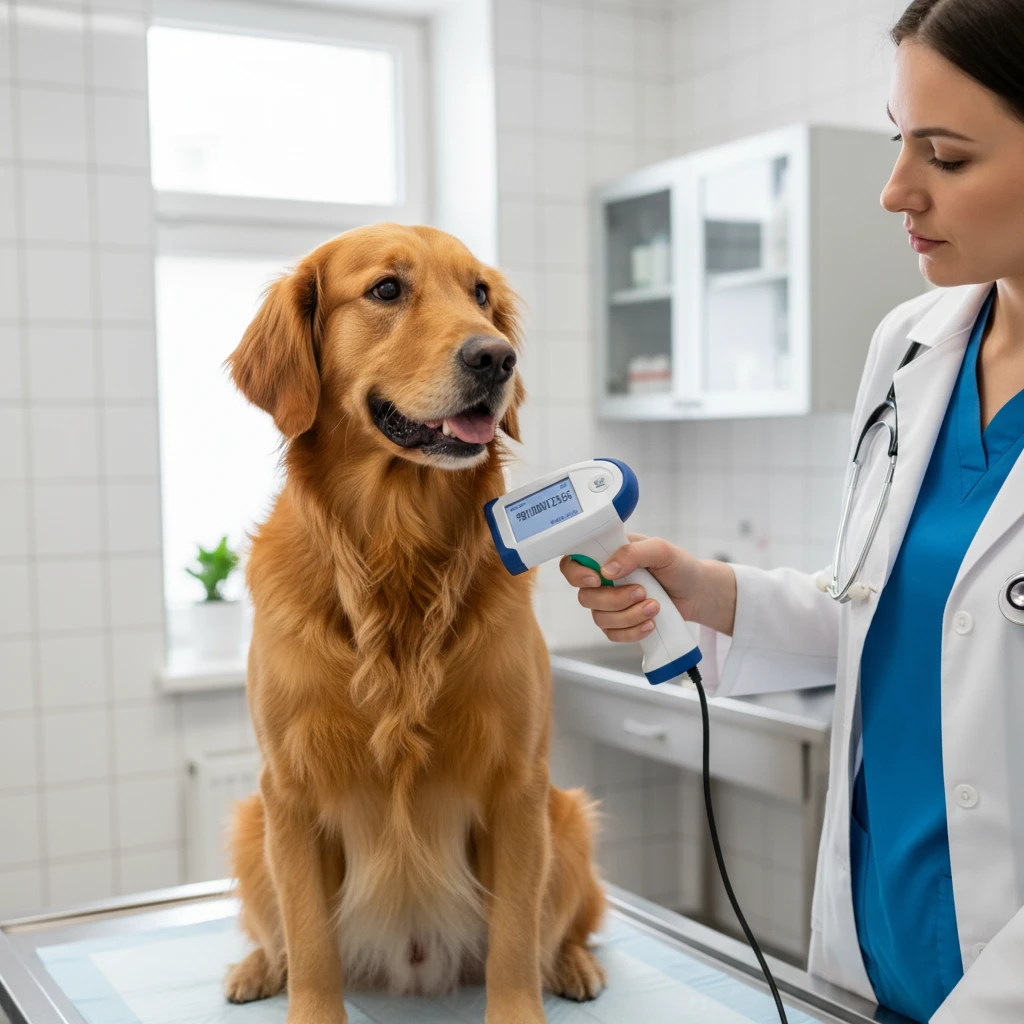
- Scanning: The vet or officer will scan the dog first to ensure a chip isn’t already present.
- Implantation: The loose skin between the shoulder blades is lifted, and the needle is inserted. The chip is injected into the subcutaneous tissue.
- Confirmation: The area is scanned again immediately to confirm the chip is reading correctly.

Consequences of Non-Compliance
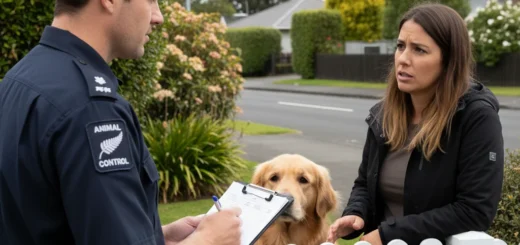
Ignoring the dog microchipping requirements NZ is not just a risk to your pet’s safety; it is a financial risk. Animal Control Officers have the authority to issue infringement notices for non-compliance.
Infringement Fees
Under the Dog Control Act 1996, the infringement fee for failing to microchip a dog that is required to be microchipped is currently set at $300. This is an instant fine, not a court summons.
Seizure of Dogs
Beyond fines, if an unregistered and un-microchipped dog is impounded, the council may refuse to release the dog until the owner pays for the registration, the microchipping, and the impound fees. In severe cases involving dangerous dogs, failure to comply with microchipping orders can contribute to legal grounds for the dog’s destruction or the disqualification of the owner from owning dogs in the future.
People Also Ask
Does a microchip act as a GPS tracker?
No. A microchip is a passive RFID device. It has no battery and does not transmit a GPS signal. It only transmits its unique number when a scanner is passed over it. You cannot use a microchip to track your dog’s location in real-time on your phone.
Can I microchip my dog myself?
While it is not strictly illegal for a layperson to insert a microchip, it is highly discouraged and often not recognized by councils unless done by an authorized implanter. Improper placement can lead to nerve damage, infection, or the chip migrating to an unreadable area. To satisfy council requirements, the verification usually needs to come from a vet or authorized officer.
What age should a puppy be microchipped in NZ?
Puppies are typically microchipped between 8 and 12 weeks of age. This aligns with their first or second round of vaccinations. Legally, they must be registered (and therefore microchipped) by 3 months of age.
Do microchips expire?
No, microchips are designed to last the lifetime of the dog. They do not have batteries that run out. However, in very rare instances, a chip can fail or migrate (move) to a different part of the body, making it hard to find. It is good practice to ask your vet to scan the chip annually during check-ups.
How do I check if my dog’s microchip details are up to date?
You can check your details by contacting your local council to verify the NDD records. For the NZCAR, you can visit the “Animal Register” website (animalregister.co.nz) and use your login details or contact them directly to update your address or phone number.
Is microchipping mandatory for cats in NZ?
Currently, microchipping is not a nationwide legal requirement for cats in New Zealand under the Dog Control Act (which applies only to dogs). However, some local councils have introduced bylaws requiring cat microchipping, and it is strongly recommended by the SPCA and veterinarians for all companion animals.